
The landscape of conversational artificial intelligence has reached a tipping point. When asking about the best AI chatbots 2026, you’re no longer looking for simple question-and-answer tools. Today’s AI chatbots represent sophisticated digital assistants capable of autonomous decision-making, multimodal understanding, and seamless integration into every aspect of personal and professional life.
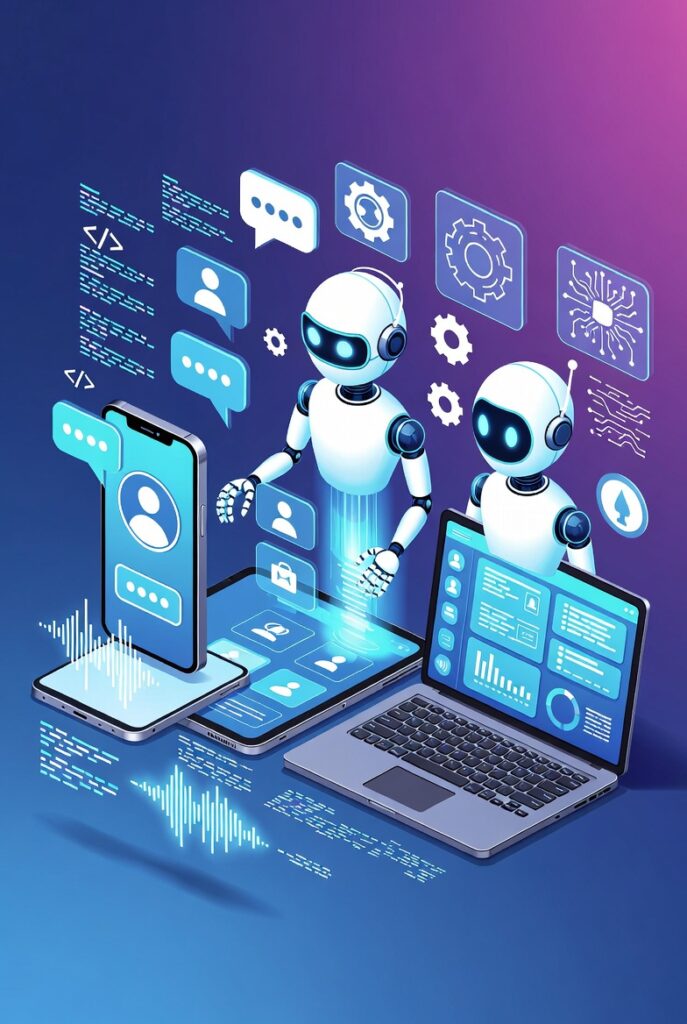
The global chatbot market tells a compelling story. Revenue projections show growth from $239.2 million in 2025 to $325.3 million in 2026, reaching an impressive $454.8 million by 2027. More than 78% of organizations have already integrated AI into at least one business function, according to McKinsey’s State of AI report. This explosive adoption isn’t happening by chance—businesses are discovering that modern AI chatbots deliver measurable returns through cost reduction, improved customer experience, and unprecedented scalability.
Table of Contents
The Evolution of AI Chatbots: From Simple Bots to Agentic Systems
Early chatbots followed rigid scripts and failed miserably at understanding context. Fast forward to 2026, and we’re witnessing what industry experts call “agentic AI”—chatbots that don’t just respond but proactively plan, execute, and complete complex workflows without constant human supervision.
Gartner identifies agentic AI as one of the most transformative technologies shaping business in 2026. These systems represent a fundamental shift from reactive tools to autonomous agents capable of managing entire processes, from customer refunds to sophisticated data analysis.
The best AI chatbots 2026 share several defining characteristics that set them apart from their predecessors:
Multimodal Intelligence: Modern chatbots seamlessly process text, voice, images, and video. Google Gemini exemplifies this trend by offering unified experiences across different input types, while ChatGPT’s GPT-5.1 automatically adjusts its reasoning depth based on query complexity.
Extended Context Windows: Advanced models like Claude and ChatGPT now support dramatically longer conversations with better memory retention. This enables more natural, human-like interactions where the AI remembers previous discussions and builds upon them intelligently.
Voice-First Capabilities: Research from Zendesk indicates call volumes are expected to rise by nearly 20% over the next few years. Voice-enabled AI chatbots address this demand while offering faster, more empathetic, and more inclusive communication channels compared to text-based alternatives.
Privacy and Security: Platforms like Lumo from Proton AG have emerged as privacy-focused alternatives, offering zero-access encryption and open-source transparency for enterprises that prioritize data protection above all else.
Also Read : Best AI Massage Chairs in 2026: Your Ultimate Guide to Smart Relaxation Technology
Top AI Chatbots Leading the Conversation in 2026
ChatGPT: The Versatile Powerhouse
ChatGPT continues dominating with over 800 million weekly active users. OpenAI’s latest GPT-5.1 model automatically detects question complexity and allocates appropriate reasoning time—giving instant answers for simple queries while taking time to “think” through complex problems. The platform has evolved beyond simple chat into an ecosystem for custom GPT creation, allowing users to build specialized agents without writing code.
According to OpenAI’s latest reports, monthly revenue reached $300 million in August 2024, reflecting massive user adoption across industries. ChatGPT excels at content creation, coding assistance, complex problem-solving, and multimodal tasks including DALL-E 4 image generation.
Google Gemini: The Ecosystem Integrator
Google’s flagship best AI chatbots 2026 offering has confirmed plans to replace Google Assistant on Android devices. Gemini’s strength lies in seamless integration with Workspace tools—Gmail, Drive, Calendar, and Docs—making it ideal for productivity workflows. The multimodal capabilities allow users to engage across text, images, audio, and video within a unified interface.
Google has embedded Gemini directly into everyday workflows, from email composition to document analysis. This deep integration means users can leverage AI assistance without switching contexts or applications.
Claude: The Ethical AI Champion
Developed by Anthropic, Claude has carved out a distinct position as the go-to best AI chatbots 2026 solution for long-form writing, document analysis, and situations requiring ethical AI use. The platform focuses on transparent, carefully curated responses, making it particularly valuable in healthcare, finance, and enterprise environments where safety and accuracy are paramount.
Claude’s extended context window supports in-depth conversations and comprehensive document processing. Content creators and technical professionals consistently choose Claude for its nuanced understanding and reliable outputs. Learn more about Claude’s capabilities at Anthropic’s official documentation.
Microsoft Copilot: The Enterprise Productivity Pilot
Microsoft Copilot has evolved from a search assistant into a proactive team member embedded within Windows 11 and Microsoft 365. For professionals spending their days in Teams, Excel, and PowerPoint, Copilot represents the ultimate productivity enhancer.
The platform offers “Agentic Workflows” that autonomously manage calendars, draft presentations from raw notes, and perform real-time security threat analysis. Commercial data protection ensures business information never leaves secure tenant environments—a critical consideration for enterprise deployment.
Perplexity AI: The Research Specialist
Perplexity has redefined AI-powered research through its citation-heavy, real-time approach. The platform specializes in delivering precise, sourced answers with transparent attribution—making it invaluable for academic research, journalism, and fact-checking.
By October 2024, Perplexity reported a $50 million revenue run rate, driven largely by its premium subscription model. The platform’s growth signals strong adoption in sectors requiring AI-powered insights backed by verifiable sources. Visit Perplexity to experience citation-based AI search.
Grok: The Real-Time Information Leader
Built by X (formerly Twitter), Grok 3 and 4 models offer native, sub-second access to the X data stream. This unique capability makes Grok the ultimate tool for monitoring market sentiment, breaking news, and emerging technological trends. The 2025 launch of Grok Business introduced “Isolated Vaults,” allowing companies to connect private data without information ever leaving encrypted storage.
Grok positions itself as essential for finance, media, and rapid-response sectors where being minutes behind the news cycle means competitive disadvantage.
Meta AI: The Social Integration Expert
Built into WhatsApp, Instagram, and Facebook, Meta AI offers unparalleled accessibility through social platform integration. Powered by Llama models, it provides strong image and video generation capabilities completely free to users.
While privacy concerns exist due to Meta’s ecosystem, the platform’s seamless social media integration and creative media tools make it popular among casual creators and social media professionals.
Zapier Chatbots: The Workflow Automation Specialist
Zapier Chatbots aren’t designed for traditional conversation—they’re built to act. These best AI chatbots 2026 tools connect to over 6,000 applications, enabling no-code automation that small business owners and entrepreneurs can deploy without technical expertise.
The action-oriented approach allows chatbots to automatically trigger workflows, add leads to CRMs, send calendar invites, and execute complex business processes based on chat interactions. Explore automation possibilities at Zapier.
SCOUT Analysis: Understanding the AI Chatbot Landscape
Strengths
The best AI chatbots 2026 demonstrate remarkable versatility across use cases. They reduce operational costs through automation while maintaining service quality. Extended context windows enable more natural conversations. Integration capabilities allow AI to fit seamlessly into existing workflows. Advanced reasoning handles complex queries that previously required human expertise.
Challenges
Despite impressive capabilities, challenges persist. AI hallucinations occasionally produce inaccurate information. Privacy concerns remain paramount, especially for enterprises handling sensitive data. Integration complexity can overwhelm smaller organizations lacking technical resources. Training requirements mean chatbots need substantial data to perform optimally in specialized domains. Regulatory uncertainty creates hesitation around deployment in regulated industries.
Opportunities
Market growth projections show massive expansion potential. Voice AI adoption creates new engagement channels. Personalization through first-party data enables tailored experiences. Agentic AI capabilities allow chatbots to handle end-to-end workflows. Cross-platform integration opportunities continue expanding. Industry-specific customization opens new markets.
Uncertainties
Legal frameworks around AI liability remain unclear. Technology evolution happens at unprecedented speed, making long-term planning difficult. Competitive dynamics shift rapidly as new players emerge. User adoption patterns vary significantly across demographics. Long-term trust issues could impact widespread acceptance.
Threats
Cybersecurity vulnerabilities could undermine confidence. Regulatory restrictions may limit functionality. Competition from open-source alternatives threatens commercial models. Over-reliance on AI could reduce critical thinking skills. Energy consumption concerns raise sustainability questions about large-scale AI deployment.
Comparison Table: Best AI Chatbots 2026 Features
| Chatbot | Primary Strength | Best For | Pricing | Key Feature |
|---|---|---|---|---|
| ChatGPT | Versatility | Content creators, general use | Free/$20/month | Custom GPTs, multimodal |
| Google Gemini | Ecosystem integration | Google Workspace users | Free/Advanced plan | Android integration, multimodal |
| Claude | Ethical AI, writing | Long-form content, enterprises | Free/Pro upgrade | Extended context, safety |
| Microsoft Copilot | Enterprise productivity | Business professionals | Free basic/Pro | Office 365 integration |
| Perplexity AI | Research, citations | Students, journalists | Free/$20/month | Real-time sourcing |
| Grok | Real-time data | Finance, media | Business plans | X data stream access |
| Meta AI | Social integration | Social media users | Free | Platform integration |
| Zapier Chatbots | Workflow automation | Entrepreneurs | Free/$20/month | 6,000+ app connections |
Voice AI: The Next Frontier for Best AI Chatbots 2026
Voice-powered assistants represent one of the most significant trends shaping the best AI chatbots 2026 landscape. Research consistently shows higher customer satisfaction with phone interactions enhanced by AI, particularly when voice bots handle routine queries and seamlessly escalate complex issues to human agents.
For urgent and high-intent cases, voice assistants deliver faster, more empathetic responses than text-based alternatives. As staffing budgets tighten and call volumes rise, voice AI emerges as a scalable solution that maintains quality while reducing costs.
Leading organizations deploy AI voice assistants across both support and sales functions. The key to success lies in implementing proper escalation protocols—when sentiment analysis detects customer frustration, the system must transfer smoothly to human representatives.
Personalization Through First-Party Data
The disappearance of third-party cookies has fundamentally changed how the best AI chatbots 2026 deliver personalized experiences. Modern chatbots rely on first-party data combined with Retrieval-Augmented Generation (RAG) to recall context, predict needs, and adapt in real-time.
Healthcare bots remind patients about prescriptions based on medical history. Finance chatbots suggest personalized investment options aligned with individual risk profiles. Retail assistants deliver product recommendations based on browsing behavior and purchase history.
The outcome is measurable: higher First Contact Resolution rates, improved Net Promoter Scores, and increased revenue per customer interaction. According to leading CX research, personalized AI interactions drive customer satisfaction scores 30-40% higher than generic responses.
No-Code Revolution: Building Chatbots Without Coding
The prevailing trend shaping best AI chatbots 2026 development is “vibe coding,” also known as prompt-driven development. This approach lets non-technical teams design conversational flows in natural language, test instantly, and iterate rapidly without writing traditional code.
Platforms like Zapier Chatbots and ChatGPT’s Custom GPTs have democratized AI development. Small business owners can now create sophisticated automated systems that previously required dedicated development teams and significant budgets.
This no-code revolution accelerates chatbot deployment and enables rapid personalization at scale. Teams can experiment with different approaches, learn from user interactions, and refine experiences in days rather than months.
The Multi-AI Workflow Strategy
Industry experts increasingly recommend using multiple AI chatbots for different tasks rather than relying on a single platform. This specialized approach leverages each tool’s unique strengths for optimal results.
A typical professional workflow might involve using Perplexity AI to gather initial research and verify facts, Claude to draft comprehensive reports with nuanced analysis, and Google Gemini to distribute findings through Workspace tools. This multi-AI strategy maximizes productivity by matching specific tasks to the most capable platforms.
The best AI chatbots 2026 users understand that different tools excel at different functions. Rather than forcing one chatbot to handle everything, they build custom toolkits that make them significantly more productive, creative, and informed.
Privacy-Focused AI Chatbots Gain Traction
As data privacy concerns intensify, platforms like Lumo are gaining enterprise attention through zero-access encryption and open-source transparency. These best AI chatbots 2026 options ensure users maintain complete control over conversations without data logging or external access.
For organizations in regulated industries—healthcare, legal services, financial institutions—privacy-focused AI represents the only viable path to adoption. Traditional chatbots that route data through external servers create unacceptable compliance risks.
The tradeoff involves slightly reduced functionality compared to cloud-based alternatives, but for privacy-conscious users, this represents an acceptable compromise. As regulations like GDPR become more stringent, privacy-first chatbots may transition from niche offerings to mainstream requirements.
Industry-Specific Applications Driving Adoption
Generic chatbots are giving way to industry-specific solutions optimized for particular use cases. Healthcare chatbots now handle appointment scheduling, symptom checking, and medication reminders with specialized medical knowledge. Educational platforms use AI tutors that adapt to individual learning styles and pace.
Customer service chatbots have evolved beyond simple FAQ responses to handle complex troubleshooting, process refunds, and manage subscription changes autonomously. E-commerce implementations use AI to provide personalized shopping assistance, size recommendations, and post-purchase support.
Financial services deploy chatbots for fraud detection, investment advice, and loan application processing. Legal firms use AI assistants for document review, case research, and client intake. Real estate platforms leverage chatbots for property searches, virtual tours, and mortgage pre-qualification.
These specialized applications demonstrate how the best AI chatbots 2026 have moved from general-purpose tools to domain-specific solutions that understand industry terminology, regulations, and best practices.
The Future of AI Chatbots: What Comes Next
Looking beyond 2026, several trends will shape the next evolution of conversational AI. Emotional intelligence will improve dramatically as sentiment analysis becomes more sophisticated. Chatbots will detect subtle cues in text and voice, adjusting responses to match user emotional states.
Predictive capabilities will advance through better context understanding and pattern recognition. Rather than simply responding to queries, future chatbots will anticipate needs and proactively offer assistance before users even ask.
Regulatory frameworks will crystallize as governments worldwide establish clearer guidelines around AI deployment, liability, and data protection. Industry standards will emerge for transparency, explainability, and ethical AI use.
Energy efficiency will become critical as environmental concerns around AI’s computational requirements intensify. The best AI chatbots 2026 and beyond will need to balance capability with sustainability, optimizing performance while minimizing carbon footprint.
Implementation Best Practices for Businesses
Organizations deploying AI chatbots should follow proven strategies to maximize success. Start with clear objectives—define specific problems the chatbot should solve rather than implementing AI for its own sake. Identify high-volume, repetitive tasks that consume human resources without requiring complex decision-making.
Choose platforms that integrate with existing systems. The best AI chatbots 2026 offer APIs and connectors that work seamlessly with CRM platforms, help desk software, and communication tools already in use. Friction during implementation kills adoption.
Implement robust testing before full deployment. Use pilot programs with controlled user groups to identify issues and refine responses. Monitor conversations to understand where the chatbot succeeds and where human intervention remains necessary.
Create clear escalation paths for complex queries. Users should never feel trapped in frustrating loops with a chatbot that can’t help. Smooth handoffs to human agents preserve customer satisfaction even when AI reaches its limits.
Measure performance rigorously through metrics like resolution rate, customer satisfaction scores, average handling time, and cost per interaction. Use data to continuously improve chatbot responses and expand capabilities over time.
Visit Google’s AI principles for guidance on responsible AI implementation that prioritizes user benefit and ethical considerations.
Read About : Best AI Tools for Stock Market Analysis: 2026’s Top Trading Platforms
Frequently Asked Questions
What is the best AI chatbot available in 2026?
The answer depends on your specific needs. ChatGPT leads in versatility and overall capability, making it ideal for general use. Google Gemini excels for users embedded in the Google ecosystem. Claude is preferred for long-form writing and ethical AI applications. Microsoft Copilot serves enterprise productivity best. Perplexity AI dominates research and fact-checking. Choose based on your primary use case rather than generic “best” claims.
Are AI chatbots replacing human customer service representatives?
Not entirely. The best AI chatbots 2026 handle routine queries, freeing human agents to focus on complex issues requiring empathy and creative problem-solving. The most effective implementations combine AI efficiency with human expertise, using chatbots for initial triage and simple resolutions while escalating nuanced situations to people.
How much do premium AI chatbot subscriptions cost?
Most platforms offer free tiers with limited features. Premium subscriptions typically range from $14.99 to $20 per month for individual use. Enterprise plans vary based on usage volume and feature requirements. Many users find free versions sufficient for casual use, while professionals benefit from paid features like extended context, priority access, and advanced capabilities.
Can AI chatbots access and analyze my private documents?
This depends on the platform. Privacy-focused options like Lumo offer zero-access encryption, ensuring your data remains completely private. Other chatbots may store conversations for improvement purposes. Always review privacy policies before uploading sensitive information. For confidential business documents, consider enterprise plans with guaranteed data protection and compliance certifications.
Do I need technical skills to build a custom chatbot?
No. The no-code revolution means platforms like Zapier Chatbots and ChatGPT’s Custom GPTs allow anyone to create sophisticated chatbots using natural language instructions. You describe what you want the chatbot to do, and the platform handles the technical implementation. Basic computer literacy is sufficient for most chatbot building tools available in 2026.
Which AI chatbot is best for coding and software development?
Claude and ChatGPT both excel at coding tasks, with ChatGPT offering broader language support and Claude providing more detailed explanations. GitHub Copilot remains specialized for in-IDE assistance. For learning programming, ChatGPT’s interactive approach helps beginners, while experienced developers often prefer Claude’s nuanced code reviews and architectural suggestions.
Are voice-enabled chatbots more effective than text-based ones?
For certain use cases, yes. Voice AI excels in urgent situations, when users are multitasking, or for accessibility needs. Text chatbots work better when users need to review information carefully or prefer asynchronous communication. The best AI chatbots 2026 offer both modalities, allowing users to choose based on context and preference.
How do AI chatbots handle multiple languages?
Most leading platforms support dozens of languages with varying proficiency levels. ChatGPT, Claude, and Gemini handle major languages effectively, including nuanced translation and cultural context. Performance decreases with less common languages. For critical multilingual applications, test thoroughly in all required languages before deployment.
What industries benefit most from AI chatbot implementation?
E-commerce sees significant gains through 24/7 customer support and personalized recommendations. Healthcare uses chatbots for appointment scheduling and symptom checking. Financial services deploy AI for fraud detection and customer inquiries. Education leverages chatbots as adaptive tutoring systems. Any industry with high-volume, repetitive customer interactions benefits substantially.
Will AI chatbots continue improving after 2026?
Absolutely. Development cycles continue accelerating, with new models and capabilities releasing quarterly. Agentic AI represents just the beginning of autonomous systems. Expect dramatic improvements in emotional intelligence, reasoning ability, multimodal understanding, and specialized domain expertise throughout 2026 and beyond. The best AI chatbots 2026 will seem primitive compared to systems available in 2028.
Conclusion
The best AI chatbots 2026 represent transformative technology that’s reshaping how we work, communicate, and access information. From ChatGPT’s versatile intelligence to specialized tools like Perplexity’s research capabilities, modern AI chatbots offer solutions for virtually every use case.
Success with AI chatbots requires understanding each platform’s strengths and matching them to specific needs. The multi-AI workflow approach—using different chatbots for different tasks—delivers superior results compared to relying on a single platform.
Privacy considerations, ethical AI practices, and thoughtful implementation separate successful deployments from disappointing ones. As the technology continues evolving at breakneck speed, staying informed about new capabilities and best practices ensures you leverage best AI chatbots 2026 effectively.
The chatbot revolution isn’t coming—it’s here. Whether you’re a student seeking research assistance, a business owner automating customer service, or a professional enhancing productivity, the right AI chatbot can dramatically improve your capabilities and results.
Check Out : How to Integrate AI in Excel: The Complete 2026 Guide to Transform Your Spreadsheets